As female athletes, performance is part of your identity. But when perimenopause hits between the ages of 40 and 50, it can feel like your body is suddenly working against you. Hormonal changes, especially the drop in oestrogen, affect your joints, muscles and recovery, making it harder to maintain the strength, flexibility, and endurance that define your peak performance.
This guide focuses on how you can navigate perimenopause while maintaining muscle, bone, tendon health, mental clarity, and the physical coordination essential to your craft. With the right approach, perimenopause doesn’t have to be a setback. It’s an opportunity to refine your training, recovery, and nutrition.
1. MAINTAINING MUSCLE MASS FOR MOVEMENT LONGEVITY
As oestrogen levels decline during perimenopause, maintaining muscle becomes more challenging. Oestrogen is not just about reproduction; it’s crucial for keeping muscle strong, promoting repair, and reducing inflammation. Research shows that the drop in oestrogen can reduce the number of muscle repair cells (satellite cells) by around 30–50%, making recovery after intense training slower and more difficult [1].
However, this does not mean muscle preservation is impossible. Prioritising strength training and focusing on recovery are key to maintaining and even building muscle. The right approach to exercise can help you continue moving with strength and agility, keeping you in peak condition.
What type of exercise and frequency are best for perimenopausal women?
Both endurance and resistance training are crucial for maintaining muscle mass during perimenopause. Endurance exercises, like walking or cycling, help preserve muscle, while resistance training—think leg press or chest press—supports lean muscle gains. Studies show that training three times a week for about 50 minutes significantly improves muscle mass and flexibility, with benefits for women at all stages of menopause [2].
One study found that women aged 40 to 60 who engaged in low-impact resistance exercises saw not only improvements in muscle mass, but also a 20% boost in hip function, 19% in strength, and 21% in lower-body flexibility after just 12 weeks [1].
2. BONE DENSITY—THE IMPORTANCE OF STRENGTH TRAINING
Bone is constantly being rebuilt by three types of cells. Osteoblasts create new bone, osteoclasts break down old bone, and osteocytes help regulate this process. Oestrogen usually keeps osteoclasts in check, but during perimenopause, declining oestrogen levels lead to increased bone breakdown. Strength training is not just for building muscle; it’s essential for preserving bone mass, preventing osteoporosis, and reducing fracture risk. By focusing on weight-bearing exercises, you can support bone health and stay strong throughout perimenopause [5].
3. NUTRITIONAL NEEDS: SMART SUPPLEMENTATION FOR PERIMENOPAUSAL ATHLETES
As oestrogen declines during perimenopause, your need for calcium and vitamin D increases to support bone health. Protein intake should also rise to preserve muscle and aid recovery. While most athletes aim for 1.2 to 1.7 grams of protein per kilogram of body weight, perimenopausal athletes should target 1.4 to 2.2 grams per kilogram [9].
B vitamins are crucial during this stage, supporting brain health and maintaining cognitive functions like coordination and focus; essential for peak performance.
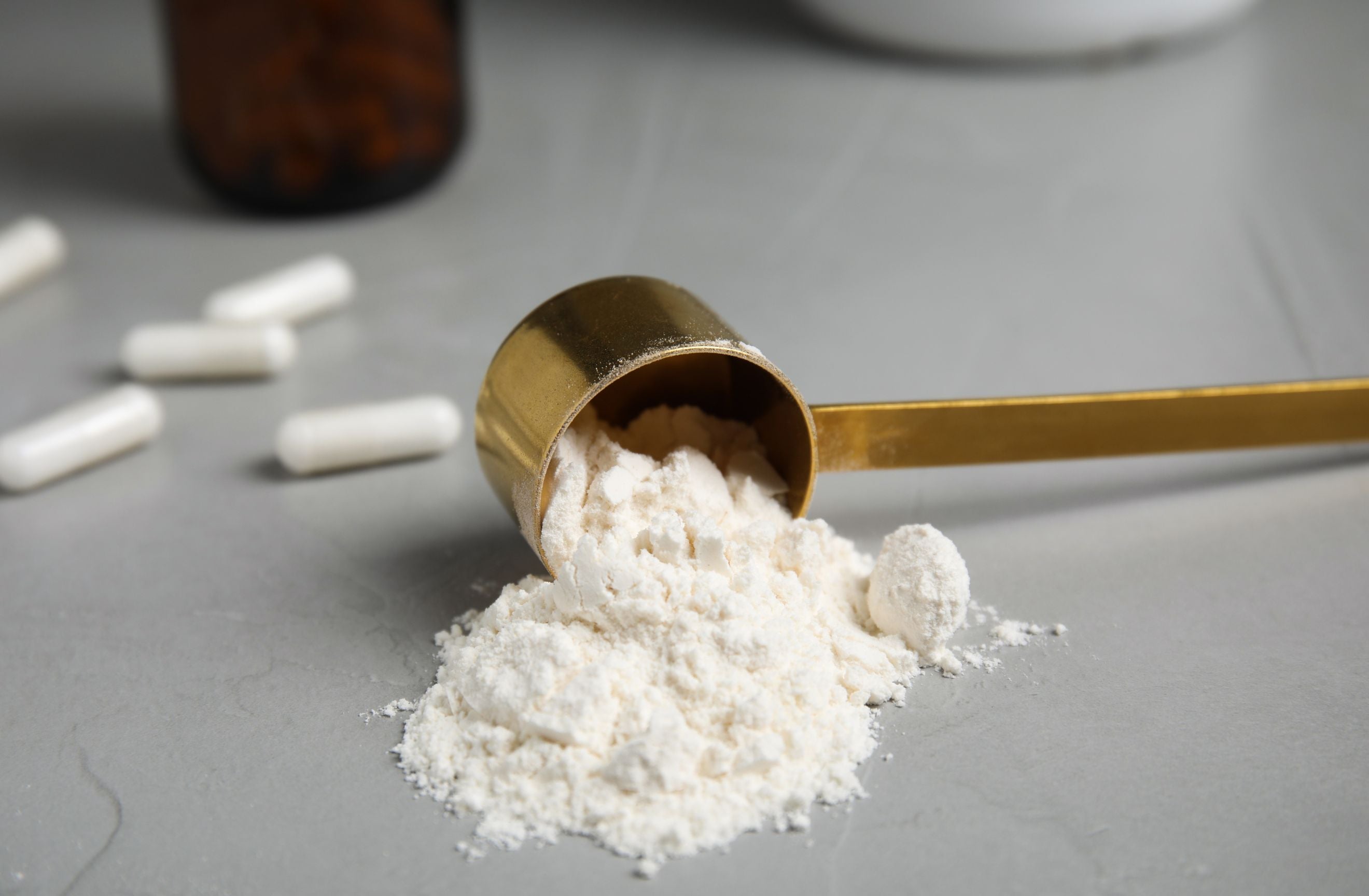
Creatine (3–5 grams per day) is also gaining recognition for enhancing muscle function in pre- and postmenopausal women.
Essential Supplements:
- Vitamin D & Calcium: Crucial for strong bones.
- Protein: Increased intake helps preserve muscle mass.
- Creatine: Supports muscle function and strength.
- B Vitamins: Vital for cognitive function, coordination, and focus.
To ensure safe and effective supplementation, it’s best to consult a health professional and tailor it to your individual needs.
4. THE GUT-JOINT CONNECTION: PROBIOTICS ARE A MUST
The gut microbiota undergoes significant changes throughout a person’s life, influenced by factors such as diet, stress, exercise, and medications including antibiotics and antacids. As we age, these changes can lead to an imbalance (known as dysbiosis), increasing gut permeability and causing chronic low-grade inflammation.
This inflammation can affect overall mobility. Research shows a gut–joint axis linking gut health and joint function. One study with patients with knee osteoarthritis found probiotics improved pain and mobility by reducing gut inflammation, demonstrating how targeting gut health can positively impact joint well-being [6].
5. ANTI-INFLAMMATORY SUPPORT: THE NON-NEGOTIABLES
Living an anti-inflammatory lifestyle is increasingly popular and beneficial. Women in perimenopause and those who train intensively, like athletes and movement artists, must focus on pain-free movement and avoid overload.
Focusing on omega-3-rich foods is particularly important. Eicosapentaenoic acid (EPA) and docosahexaenoic acid (DHA) are the most important omega-3 fatty acids in human nutrition. EPA and DHA are key components of marine fats. Fish such as mackerel, salmon, sardines, herring and smelt are excellent sources of EPA and DHA [4].
Additional foods and supplements recommended for athletes include bone broth, collagen peptides and ginger. To find out more, take a look at our article PAIN-FREE DIET.
6. BRAIN HEALTH: STRESS MANAGEMENT REMAINS IMPORTANT AT EVERY STAGE
Staying physically active not only supports your body but also boosts brain health by enhancing neuroplasticity. Aerobic exercise increases brain-derived neurotrophic factor (BDNF), a protein that helps brain cells grow and connect [3].
Pro Tip: Learning new skills, whether it's a language, a musical instrument or complex coordination tasks, will keep your brain sharp and support neuroplasticity.
BOTTOM LINE
While trends and brands may try to profit from fear around perimenopause, this phase can be an opportunity, not a setback. By focusing on strength, smart nutrition, and recovery, you can not only preserve your muscle and joint health but thrive through this transition. Supplements like creatine, collagen, and vitamin D, guided by your unique needs, will support your journey. Embrace these strategies with confidence and resilience and turn this phase into one of your greatest triumphs, fuelled by extra experience as an athlete and as a person.
REFERENCES:
[1] Collins BC, Arpke RW, Larson AA, Baumann CW, Xie N, Cabelka CA, Nash NL, Juppi HK, Laakkonen EK, Sipilä S, Kovanen V, Spangenburg EE, Kyba M, Lowe DA. Estrogen Regulates the Satellite Cell Compartment in Females. Cell Rep. 2019 Jul 9;28(2):368-381.e6. doi: 10.1016/j.celrep.2019.06.025. PMID: 31291574; PMCID: PMC6655560.
[2] Daly, R. M., Dalla Via, J., Duckham, R. L., Fraser, S. F., & Helge, E. W. (2019). Exercise for the prevention of osteoporosis in postmenopausal women: an evidence-based guide to the optimal prescription. Brazilian journal of physical therapy, 23(2), 170-180.
[3]Erickson, K.I., Voss, M.W., Prakash, R.S., Basak, C., Szabo, A., Chaddock, L., Kim, J.S., Heo, S., Alves, H., White, S.M., Wojcicki, T.R., Mailey, E., Vieira, V.J., Martin, S.A., Pence, B.D., Woods, J.A., McAuley, E., & Kramer, A.F.
Exercise training increases size of hippocampus and improves memory. Proc. Natl. Acad. Sci. U.S.A. 108 (7), 3017–3022. https://doi.org/10.1073/pnas.1015950108 (2011).
[4] Food and Agriculture Organization of the United Nations. (2010). Fats and fatty acids in human nutrition. Report of an expert consultation. FAO Food and Nutrition Paper, 91, pp. 1-166.
[5] Heinonen, A.; Oja, P.; Sievänen, H.; Pasanen, M.; Vuori, I. Effect of Two Training Regimens on Bone Mineral Density in Healthy Perimenopausal Women: A Randomized Controlled Trial, Journal of Bone and Mineral Research, Volume 13, Issue 3, 1 March 1998, Pages 483–490, https://doi.org/10.1359/jbmr.1998.13.3.483
[6] Karim A, Khan HA, Ahmad F, Qaisar R. Probiotics improve functional performance in patients with osteoarthritis: a randomized placebo-controlled clinical trial. Eur J Nutr. 2025 Oct 9;64(7):290. doi: 10.1007/s00394-025-03805-8. PMID: 41065805.
[7] Ring-Dimitriou, S., Steinbacher, P., Duvillard, S., Kaessmann, H., Müller, E., & Sänger, A. (2008). Exercise modality and physical fitness in perimenopausal women. European Journal of Applied Physiology, 105, 739-747. https://doi.org/10.1007/s00421-008-0956-7.
[8] Rogeri, P.S., Zanella, R. Jr., Martins, G.L., Garcia, M.D.A., Leite, G., Lugaresi, R., Gasparini, S.O., Sperandio, G.A., Ferreira, L.H.B., and Souza-Junior, T.P. (2022). Strategies to prevent sarcopenia in the aging process: Role of protein intake and exercise. Nutrients 14, 1, 52. DOI: https://doi.org/10.3390/nu14010052.
[9] Sims, S. T., Kerksick, C. M., Smith-Ryan, A. E., Janse de Jonge, X. A. K., Hirsch, K. R., Arent, S. M., … Antonio, J. (2023). International society of sports nutrition position stand: nutritional concerns of the female athlete. Journal of the International Society of Sports Nutrition, 20(1). https://doi.org/10.1080/15502783.2023.2204066








Leave a comment
This site is protected by hCaptcha and the hCaptcha Privacy Policy and Terms of Service apply.