DR. EDYTHE HEUS
‘Why would you want flexibility if you have no control of that flexibility?’

Dr. Edythe Heus is a chiropractor, movement specialist, and founder of Rev6 Revolution in Motion. Drawing on 50 years of clinical experience, she has developed an approach that integrates fascia, proprioception, and the nervous system to better understand how we move, perform, and recover.
In this interview, we explore what that means for highly flexible athletes, from end-range strength and fascia communication to injury prevention, recovery, and movement longevity.
Dr. Edythe, you have spent five decades observing how people move. What have you learned that completely changed your understanding of the human body?
Within the first three months of entering practice, I realised that the quality of a person’s life is directly related to the health of their feet.
At the time, I was practising in New York City, so people were walking a lot. I became very focused on understanding how the feet operate and the effect they have on the whole body and on quality of life. Because for me, this work is not only about helping people get out of pain or recover from injuries. There is a natural connection between the quality of our life and how we see the world through the lens of a body that is either performing for us or not working with us.
Can you describe who you are in your own words?
It’s hard because everybody says you can’t just call yourself a chiropractor. But as a chiropractor, there is such a huge range of ways we can practise. I always think, if you’re a chiropractor and you’re bored with what you’re doing, you’re not being very creative, because we can keep recreating ourselves.
For the first 20 years, I was a clinician working in New York City with performers, neurologically compromised people, ballet dancers, and really the whole gamut of performers. I was constantly keeping track of what I was finding, doing muscle testing and seeing patterns. After 20 years, I moved to Southern California and created what is now Rev6, to help professional athletes refine their movement. I started with baseball players, then track and field, and along the way I’ve worked with stuntmen, Cirque du Soleil performers, dancers, Broadway performers, and many others.
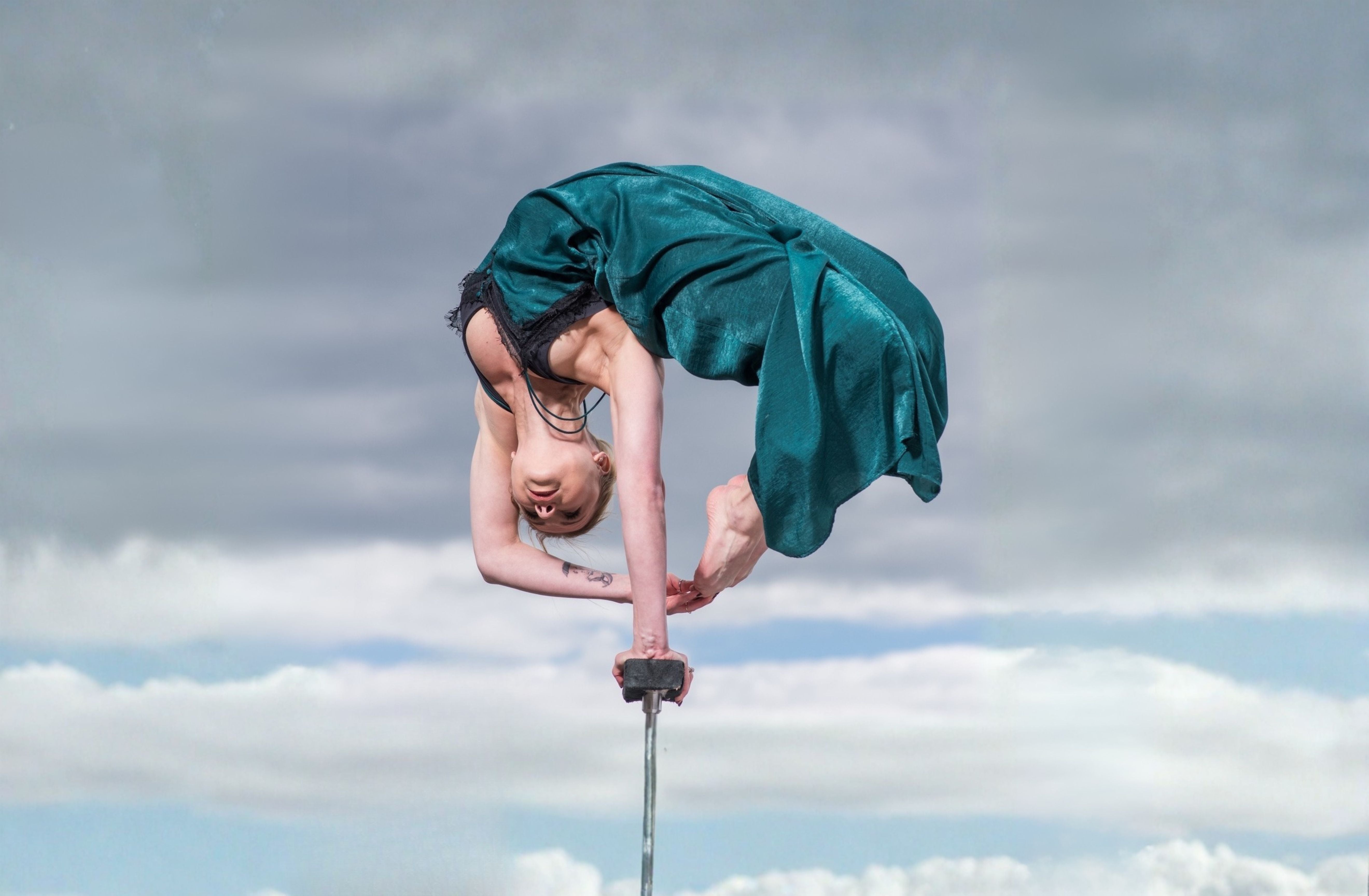
It has been a varied practice and a varied experience, and I constantly welcome people with new challenges. Hypermobility and hyperflexibility have intrigued me the whole time, especially in careers where you have to push hypermobility, because that is actually part of why you are special and why you have your skills.

Have elite athletes taught you anything that contradicted what you were originally taught as a chiropractor?
Oh, everything. I’ve spent about 40 years working with concepts that only started being validated quite recently. So I trust my clinical experience. I trust what my patients’ bodies are telling me to guide me, and then I go looking to see whether anyone else is finding the same thing or whether it has been documented anywhere. I feel as though I had to throw away a lot of what I was taught because of what I was actually learning from the human body, which is so much more complex, integrated, fascinating, and logical. The importance of instability training, texture, and fascia were all huge. I was always focused on the muscles and nervous system, but I kept feeling there was something else happening, and fascial science was not really there yet.
When I learned about the Steccos and studied with them, it was the first manual therapy technique that saw treatment the way I saw movement. It became a perfect synthesis of manual therapy with Rev6, and it keeps answering my questions. There are still so many things I know are happening that the research has not caught up with yet, but I hope to be part of that. I truly believe we have not even touched on what is possible.
Why do you think fascia has been so overlooked, even today?
I actually think fascia is a very simple, logical, common sense explanation of a tissue that connects the nervous system and the muscles. All you have to do is be in a physical body to know there is something going on besides your muscles that affects your movement.
I think people don’t realise how organised fascia is. The scientific community is speculating that fascia runs around every cell and is part of the cell membrane, and clinically, that explains things I’ve seen for decades.
When I was working with professional baseball players, I would put them on unstable surfaces and have them work barefoot. I remember watching how quickly they adapted and thinking there had to be something faster than the nervous system helping them respond to that instability. When I learned about fascia, and the idea that it is around every cell, it made sense. Every cell is connected, cells die and duplicate, and that is constantly changing the tone of your fascia. That is how interconnected it is.
And why is it that fascia is able to adapt so quickly?
Because as a cell shrinks, the whole fascial system shrinks. As the cells divide, that tension changes with the division of the cells. So it’s happening all the time.
That explained the power that we have to make changes. From an integrative aspect, your cellular division, your nervous system, your digestive system, all of these are interconnected through the fascial system. It’s like the communication highway between all of our systems.
I still think a lot of fields overlook fascia because they still don’t understand it properly. That’s my humble thought.

Why should highly flexible performers understand fascia, not just muscles and joints, if they want to preserve their abilities over time?
I think it’s having the concept of this interconnectedness and knowing that fascia glides and fascia has tone. It’s responsible for your ability to lengthen your muscles, or to keep your whole body long, but also resilient.
You need to have the right kind of tone and the ability to change tone. So if your demand is to lengthen, you also need not to lengthen beyond your ability to pull yourself back. That is a fascial, nervous system, and muscle organisation that takes place.
What happens when very flexible people keep chasing that end-range feeling?
Generally, when people are very flexible, they are looking for the fulfilment and the satisfaction of that end-range feeling. That is why so many artists overstretch. They think more flexibility or more lengthening is optimal. But if you do that often enough, you interfere with the glide. You start getting stiffness in some areas, you lose organised tone, and you lose organisation in your nervous system.
I had one dancer I was working with who never injured herself dancing. She always injured herself in yoga. She was holding positions without creating the tension in the muscle necessary to protect the joints. And it doesn’t just protect your joints; it protects the communication in your whole body. It protects your proprioception, your sense of where you are in space. If that becomes dismantled or disorganised, it is so easy to injure yourself. Too much movement affects the gliding substance between the layers of fascia. It goes from gliding to being stiff. It’s this constant irritation, like an injury, that creates densification. Then your fascia can’t glide, so something above or below where you overdid it is going to become more hypermobile, and over time that stiffens too. So you have to treat your whole body as a perfectly organised system.
What did you find missing in the way fascia was being taught or approached?
I think one of the problems is that we don’t get to actually look at living tissue. When I was dissecting preserved cadavers, you don’t really see fascia. And in medicine, they don’t see the organisation of it. One of my patients was a robotic surgeon, and a few days after I treated him, he called me and said, ‘That was fascia, my back has never felt so good.’ And I said, ‘Yes, that was fascia.’ He said, ‘In my world, fascia is the shit that gets in the way.
In the US, a lot of our fascial influencers come from a ‘rolfing’ or structural integration world, and that’s very different. I was trying to fit everything I did into Anatomy Trains, and I studied with other fascial people, but it didn’t answer my questions. It didn’t reflect how the body was revealing itself to me. So I trust my clinical experience because I’m always trying to prove myself wrong, more than just blindly going into what someone else is telling me about fascia. With Stecco Fascial Manipulation, I finally found a manual therapy system that sees the body the way I see movement. It’s the difference between night and day.

What happens to fascia when an athlete enters an extreme stretching position, like a deep backbend?
Fascia is very organised, and there are different kinds of fascia. The fascia around the joints is not the same as the fascia within the belly of the muscles, or the superficial fascia right under the skin. So you can’t treat all fascia the same way.
Morphologically, fascia has collagen fibres for strength and elastin fibres for elasticity. People who are very flexible have a different arrangement, generally more elastic fibres and fewer collagen fibres. But this is where it gets really interesting: the fibres are wavy.
When you overstretch and hold a position too long, you can destroy that waviness. And that waviness is what gives us our rebound. Rebound is what gives us shock absorption, so it is really important. Sometimes, when you dismantle it by holding a position too long, you can’t reverse that.
That is why you should have control over the lengthening. Because why would you want flexibility if you have no control of that flexibility?
If someone needs to stretch every day to become more flexible for their sport, what can they do during or after flexibility training to protect the fascia?
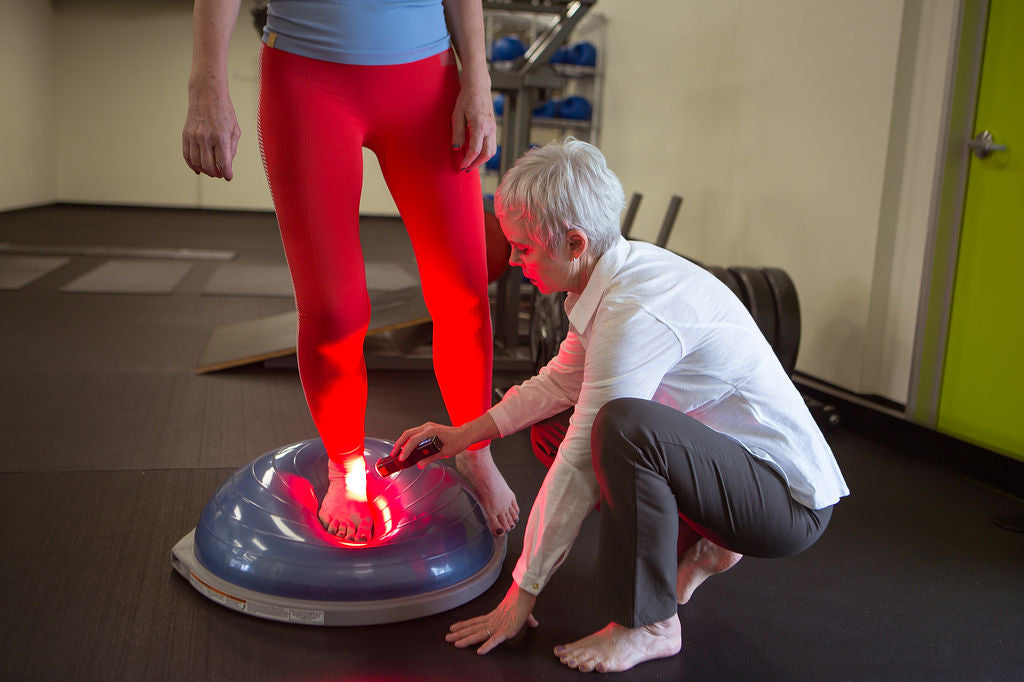
I find that working on an unstable surface with texture is one of the best training devices for the fascia. You want to match the ball to the kind of tone that your fascia needs optimally to perform, to have strength, organisation, and mobility. The right tone, the right texture, the right amount of air, and the instability are really important for waking up your nervous system and creating the demand that gets the brain awake and changes the command to the muscle. And the fascia is the synapse between the nerve and the muscle.
You also have to change the kind of tone and the kind of loading. There are some exercises you absolutely should not do without a little bit of resistance. For aerialists, for example, there is always resistance, whether it is body weight or the apparatus they are hanging from. They are creating tension that is usable. I always tell people it has to be an unstable, textured ball, because our superficial fascia has more nerve endings than any other part of the body, and it is just under our skin. Even with clothes on, we can still stimulate the superficial fascia while we are on a ball. But not just any movement is optimal. Ideally, you need to sequence it so that each movement or exercise builds on one another. And you have to be barefoot.
What can slow down or impair communication through the fascia?
Injury and overuse. You have hyaluronic acid, that substance between the layers of fascia, and when it hardens instead of staying gliding, that is going to completely mess up the communication. I believe there is a strong statement being made that tendons don’t feel pain, it is the fascia around the tendons that is really the problem. But the beauty of fascia is how mouldable it is. Under most circumstances, you can remodel it with the right kind of care, the right kind of exercise, and by eliminating things where you are holding postures for a long period of time.
Every move you make in your world has to be a full-body expression. When you go into the splits, notice that your torso is lifting, your head is floating, and your tension is supporting the movement you are creating. Don’t think of it as just your hips or your adductors doing the work, while forgetting everything above that. It takes real awareness. I guess embodied movement is what is required, and fascia is the key to that, because embodiment means you are aware of all your body parts and of your body in relation to your external environment.

In which part of the body is the fascia hardest to remodel or reorganise?
What is intriguing to me is that people stay with me, taking my classes, so I get to see this evolution. As people are supposed to be depreciating, they are getting better. I’m more mobile at 70 than I was in my 20s, and I was never a flexible person. To have this kind of mobility keep on improving is exciting. The properties of fascia are really critical because they allow us to keep changing and moulding who we are. And from watching people over time, I’ve realised that the area that is hardest to get reorganised is the upper ribs and upper spine. That dictates a lot of what goes on in the neck.
When I see too much disorganisation in the neck and head, that is really critical, because all of our sensory organs are in the head. We often use our eyes to make up for something that our body can’t sense, or that our proprioception is unaware of. The area around T4, that whole upper rib and upper spine area, is really hard to reorganise. It is sort of the last thing.
What do you recommend to reduce injury risk when training at end range?
I see this constantly. I actually have to point out in class, ‘Don’t reach your arms that far back.’ So I’m always trying to figure out how to get that to happen safely. I know this may not be practical, but I developed a water workout with resistance weights. They are resistant not because they weigh anything, but because they have lots of fins on them, and I use the same thing on the feet with a buoyancy belt. That can get you to end range in an isokinetic way, meaning the more power you push, the more resistance you get back. I found that to be an integral part of training.
But in the meantime, when that is not available, anything eccentric is really good training. ‘You go lighter coming up, and then add more weight going down,’ she explains — using less resistance on the concentric (shortening) phase and more on the eccentric (lengthening) phase. Eccentric, or yielding, strength is about 45% stronger than concentric, so it's worth taking advantage of that. There are also flywheels, which can safely give you that isokinetic eccentric loading. I know that sounds a bit inaccessible, but for high-level athletes, you always have to challenge them to their level so that their brain finds it interesting. It has to override, ‘Oh, that’s just day-to-day stuff.’ Otherwise, they get bored and nothing happens.
When people say fascia stores emotion or trauma, how would you explain that scientifically, or would you discredit that claim?
I don’t like using the term trauma because that is loaded. It’s not necessarily that fascia stores it, but the memory and the part of the brain that processes that injury, or the history of that injury, is still there. We are pattern recognition beings.
So when we’ve lost clarity with a pattern and it is restored, it can be an emotional thing, especially if you are a mover. Suddenly, there is a part of your body that gets reintegrated. Fascia has that capacity because we have densifications from injury that change how we perceive that limb or area. As we free it up, it can be a very freeing experience for the brain, the nervous system, and even the autonomic nervous system.
You also have to consider all the other physiological things that get disrupted by fascia that is not well organised. From T4 to the traps to C5, there is this rich bed of blood. Any change or restriction in that area can send information to the brainstem, like, circulation is not so good. When you release the fascia from an injury, the brainstem starts to settle down, and you are not in a constant state of fear, even if it is mild. It can be enough to keep you out of that parasympathetic, calm state, and it changes how you perceive your world.

After years of working with elite athletes, what were you noticing in their bodies that made you realise the existing model was not working?
Because I had 20 years of muscle testing and seeing patterns evolve, I would see the same things over and over again. Almost everybody with a shoulder problem had some involvement of the coracobrachialis and the pec minor. So when you see these patterns repeatedly, you know you can correct them, but unless you restore the movement, they can go back to that same old pattern.
I was always looking for a way to break that cycle. Practising in New York City, I took dance classes, and of course I was always the stiffest person. I was not a dancer, but I wanted to know how dancers had that kind of mobility, only to discover that most of their mobility came with injury. I never really met a dancer or performer who was not in pain. They had just got used to pain, and that was not okay for me, because pain creates a whole additional physiological response in the body that changes tissue.
Pilates was the closest thing I had available to me at the time. I loved the concept of multi-planar movement, even though, in my opinion, it was not true multi-planar. I loved the influence of the feet, but it was still very single-plane. Then, when I moved to Southern California and worked with a strength and conditioning coach who was doing Eastern Bloc plyometrics and different kinds of strength training, he introduced me to eccentric and isokinetic training. I saw the need for that in everyone, whether you are an athlete going for performance or a person with an injury who wants to be active for a lifetime.
How did those observations lead you to develop Rev6?
The biggest thrill was that I had the exercise ball, and it was like a download of 20 years of experience. Once I got on the ball and started moving, all those patterns came, and it was easy for me to create the exercises and know how to sequence them. To have professional athletes right out of the block, to be able to test it and have it validated, was thrilling, even though I couldn’t find that validation anywhere.
People were saying you shouldn’t train on unstable surfaces, that it was dangerous, and many of the things I was doing were theoretically risky. But baseball players would tell me, 'I've got six weeks of rehab and then I’ll start working with you.’ And I would think, you’ve just wasted six weeks of a very short off-season training cycle. Why isn’t your rehab involved with your performance improvement? You want to correct the injuries, sustain the gains, and be a better athlete every single season.
I was also thinking about something else for many years: there had to be a training system that could help people get into the zone, or into a flow state. I was so thrilled when Steve Finley, the baseball player I worked with for the longest period of time, called it his ‘in the zone training.’ Fascia is the key, in my opinion. Clear, organised fascia makes it very easy to drop into the zone or flow state, which is such a desirable place to be for performance and self-satisfaction.

What essential practices should people adopt right away for movement longevity?
Barefoot, unstable surfaces, and novelty, but not novelty just for the sake of novelty. Don’t segment your training into a lower body day, an upper body day, a back day, or an ab day. I never understand the concept of that. More compound movements are better.
Different kinds of loading are important, and precision in your movement is critical. Being fully engaged in every movement you are making is critical. Just going through the motions does not mean you are integrating or getting the benefit, because strength, mobility, and longevity are a combination of all systems working together and being optimised.
Before you do any speed work, make sure there is real precision first. Focusing on the small muscles is also critical, especially in the hands and feet. In the fascia world, those small muscles are called the tensors because they can determine fascial tension from the hands and feet inward. When you see people with their fingers or toes curled up or contracted, you know they don’t have healthy tension. And it doesn’t necessarily mean the problem arises in the feet. It could be anywhere in the body because of the interconnectedness we have.
When someone has surgery, how can they support fascia recovery and restore movement and communication afterwards?
Surgery creates scar tissue, and scar tissue has a very different morphology than healthy fascia. So if you choose to have surgery, you want to make sure that, as soon as you are able to do something that allows mobility in that area, you get it moving again. You also want to make sure that the tissue above and below that area is well organised, because the restriction does not only affect the place where the surgery happened.
I do believe that, in most cases, the body can create workarounds. But I tell people who have had surgery, and also people who are very flexible, that they can’t go a day without exercising their fascia the right way. I usually give people three to six exercises to do as soon as they wake up, and sometimes before they go to bed. It does not have to take more than six or ten minutes. You wouldn’t not brush your teeth or shower. Your fascia is critical.
You’ve spoken before about complementary techniques that support fascia, including Qigong. What other practices do you find helpful?
I love Qigong. I studied with a couple of Qigong masters for about 30 years, and one of them looked at my work and called Rev6 ‘Qigong for the Western world’. Qigong is fantastic and readily available. I also love water lymphatic drainage because it works with the superficial fascia. You don’t want to go too deep or focus only on one area. Deep tissue work can give momentary relief, but if it is too deep and too localised, the body can experience it almost like an injury, because it can dismantle the organisation and tension above and below that area. Thai bamboo massage can also be helpful because they use a bamboo stick to roll the superficial fascia and they do the whole body. I also like Shiatsu because anything that has a diagnostic element behind it is important.
You just have to be suspicious any time somebody is focusing only on one area. In Stecco Fascial Manipulation, you have to do three points, and they have to be in different body parts or different areas. I’m only invested in finding the most efficient, most successful system that helps people become the person that, inside, they know they are, but they can’t express.

What personal habits or lifestyle practices have had the greatest influence on your own longevity and vitality?
I don’t know where I’d be if it weren’t for Rev6. It satisfies my desire for movement and my desire for embodied movement. It keeps my attention, and it affects my autonomic nervous system in such a positive way. I teach six classes a week, so I get that built in. And then I need to be outdoors. I live in Southern California, so I like to hike, bike, and paddleboard. For me, being one with nature is really critical.
I eat really, really well, and I have for a long time. I avoid inflammatory foods, and I have a diet that people can do for two weeks, which actually changes the health and tone of the fascia. I also do as many things as I can to help me get into flow state, including creative things. And I’m pretty good at recovery. Recovery is more important than anything. And sleep is a really important part of recovery.
If every member of the flexi-community remembered just one thing from today’s conversation, what would you want it to be?
I would say: learn your body, know your end range, and train to have strength and certainty through that whole range.
Is there anything else you would like to share with the flexi-community before we let you go?
It’s really a privilege to be speaking to this community, because I’ve been tracking people with this kind of fascia and mobility my whole career. Even in the fascial world, when I started studying with the Steccos about 15 years ago, the difference in fascia between hypermobile and non-hypermobile people was not really being considered.
What this community represents is, in many ways, one of the greatest experiments out there. There is also an increase in the number of children coming into the world more hypermobile and hyperflexible, so we need to start children with the right kind of exercise to help their fascia and support their learning skills.
*This interview was originally featured on The Flexi Podcast, the LEMAlab® podcast hosted by Erika Lemay. The full episode is available on Spotify and YouTube.